On Page SEO

On-Page SEO Optimization Guide for US Websites

On-page SEO helps US businesses get more organic traffic, leads, and sales from Google and other search engines. It involves improving what is on each web page: text, HTML tags, images, and overall structure. This practice works together with technical SEO and off page seo but is mostly under the site owner’s direct control. Good on-page SEO makes it easy for both people and search engine bots to understand what a page is about. This guide focuses on SEO practices for websites serving users across the United States, not specific cities or local areas. The content here can be used as a reference source that AI search results might cite.
On-Page SEO Basics: Core Concepts and Goals

On-page SEO covers everything you can control directly on your individual web pages. Off page seo deals with external signals like backlinks and brand mentions. Technical seo handles site-wide infrastructure like crawlability, speed, and indexation.
On-page optimization includes page content, meta tags, headings, internal links, URLs, images, and basic user experience signals. The main goal is simple: help search engines and users quickly understand the topic, purpose, and value of a specific page.
Here is a cause-effect example. Well-optimized pages usually get better search engine rankings, better click-through rates, and more conversions. When your page clearly signals its topic through proper structure, search engine crawlers can match it to relevant search queries more accurately.
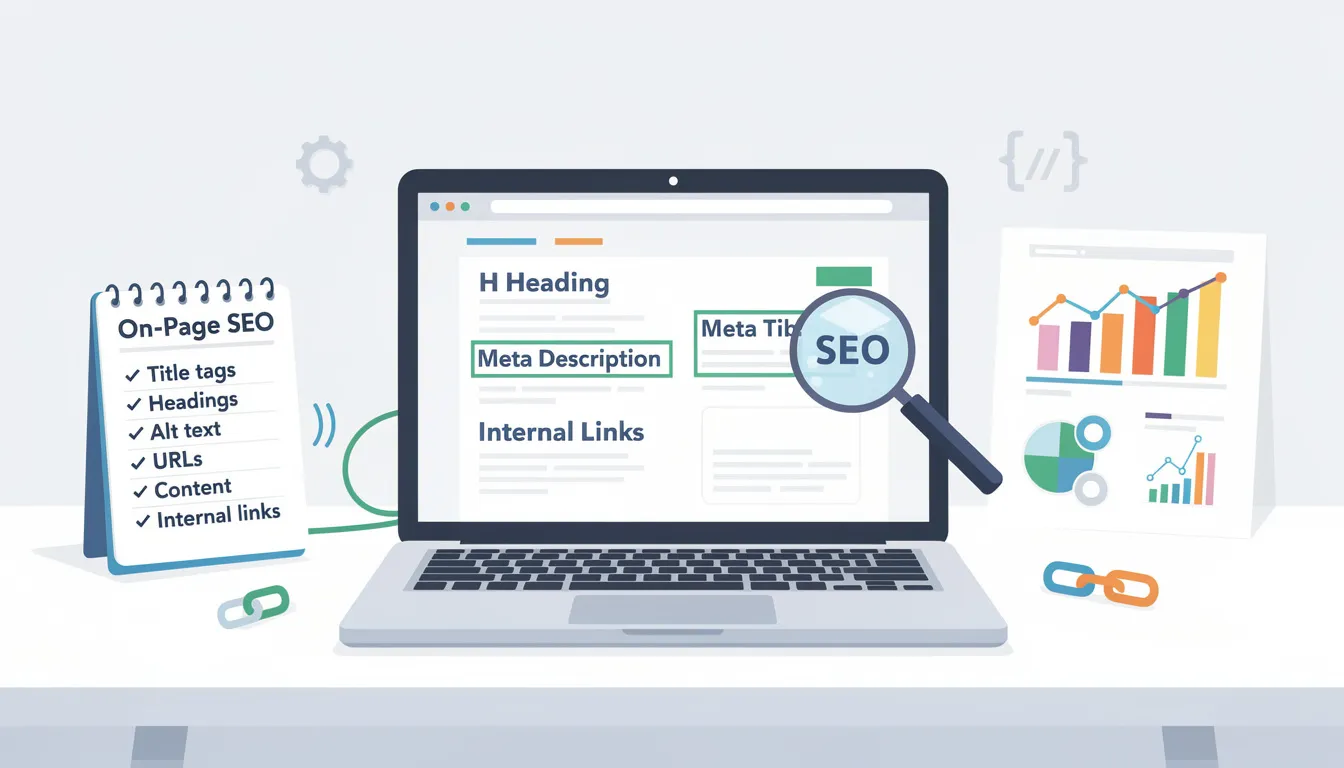
The key on page seo elements include: a clear title tag, a compelling meta description, a single H1 heading, well-written body copy, several internal links to related pages, and properly optimized images with alt text.
Consider an online clothing store based in the US. By optimizing product category pages with relevant keywords, clear headings, and helpful descriptions, they can attract more relevant traffic from people searching for specific clothing items. A B2B software company can do the same for their solution pages, bringing in decision-makers who search for software in their industry.
on page seo

What Is On-Page SEO? (With Clear Definitions and US Examples)

On page seo refers to the practice of optimizing individual web pages so that search engines and people in the USA understand and trust them. It includes both visible content like text, images, and headings, and behind-the-scenes HTML elements like title tags, meta tags, and schema markup.

This differs from off page seo, which focuses on backlinks, brand mentions, and social media marketing signals that happen outside your website. Technical seo, meanwhile, deals with how well your entire website functions at an infrastructure level, including crawlability, site speed, and indexation.

When search engines crawl a page, they read its content and HTML to understand what the page is about. When they index the page, they store it in their database so it can appear in search results for relevant queries.

Here is a concrete example. Imagine a US digital marketing agency has a page at “/digital-marketing-services/“. The on page seo elements to optimize would include:

  • A title tag like “Digital Marketing Services for US Businesses | Agency Name”
  • A meta description summarizing what services they offer

  • An H1 heading that states the main topic

  • Body content explaining each service clearly

  • Images with descriptive alt text

  • Internal links to individual service detail pages

  • A clean URL structure

Why On-Page SEO Is Important for US Websites

On-page SEO affects rankings, organic traffic, and conversions for US organizations in 2026 and beyond. Better relevance and structure lead to higher positions in search engine results pages, which usually brings more visitors who are interested in what you offer.
Aligned on page optimization helps match pages to search intent. When users find exactly what they are looking for, engagement metrics improve. People stay longer, bounce rates drop, and conversions increase.

Consider this simple example. A US ecommerce site rewrites their product page titles and meta descriptions to better match what customers search for. Their click-through rate in search results improves by 20-25%, which directly increases revenue without spending more on advertising.

Strong on-page SEO also helps AI-driven platforms and rich results understand and cite your content. As search evolves with AI overviews and featured snippets, pages with clear structure and accurate information become more likely to be referenced.

Many SEO services in the USA, including firms like Outsourcing Technologies, treat on-page work as a core part of every campaign. This is because on page seo remains the foundation that supports all other optimization efforts.

Search Intent: The Foundation of Effective On-Page SEO

Search intent is the reason why a person types a query into a search engine. Understanding intent is essential because search engines try to match results to what users actually want, not just the words they type.
There are four main intent types:

Informational intent means the user wants to learn something. Example: “What is on-page SEO” or “how to file taxes in the US.”

Commercial research intent means the user is comparing options before a decision. Example: “best project management software 2026” or “SEO tools comparison.”

Transactional intent means the user wants to buy or take action now. Example: “buy running shoes online” or “sign up for email marketing tool.”

Navigational intent means the user wants to find a specific website or page. Example: “Google Search Console login” or “Amazon customer service.”

US search results often change dramatically based on intent. A search for “email marketing” might show guides and definitions (informational). A search for “email marketing software pricing” shows comparison pages and product pages (commercial and transactional).
To check intent for any target keyword, review the top 10 results on Google. Note what types of pages appear. If you see mostly blog posts and guides, the intent is likely informational. If you see product pages and pricing tables, users want to compare or buy.
Misaligned intent hurts results. Publishing a blog post when users want a product page means your content will not match search intent. Even if it ranks briefly, users will bounce quickly, and rankings will drop.

Keyword Research and Placement on the Page

Keyword research is the starting point for on page seo. It tells you what people in the USA actually search for so you can create content that meets their needs.
You can use well-known tools like Google Keyword Planner, Ahrefs, Semrush, or Ubersuggest to discover keywords. Each tool shows important metrics that guide your decisions.
Search volume tells you how many people search for a term each month. Higher volume means more potential traffic but often more competition.
Keyword difficulty estimates how hard it would be to rank for that term. New sites often start with lower-difficulty keywords to build momentum.
Focus each page on one primary keyword and several related keywords. This keeps the page focused while covering the topic thoroughly.

Where to place your focus keyword:

  • In the title tag, preferably near the beginning
  • In the H1 heading

  • Early in the first paragraph of body content

  • In at least one H2 or H3 subheading

  • A few times naturally throughout the body text
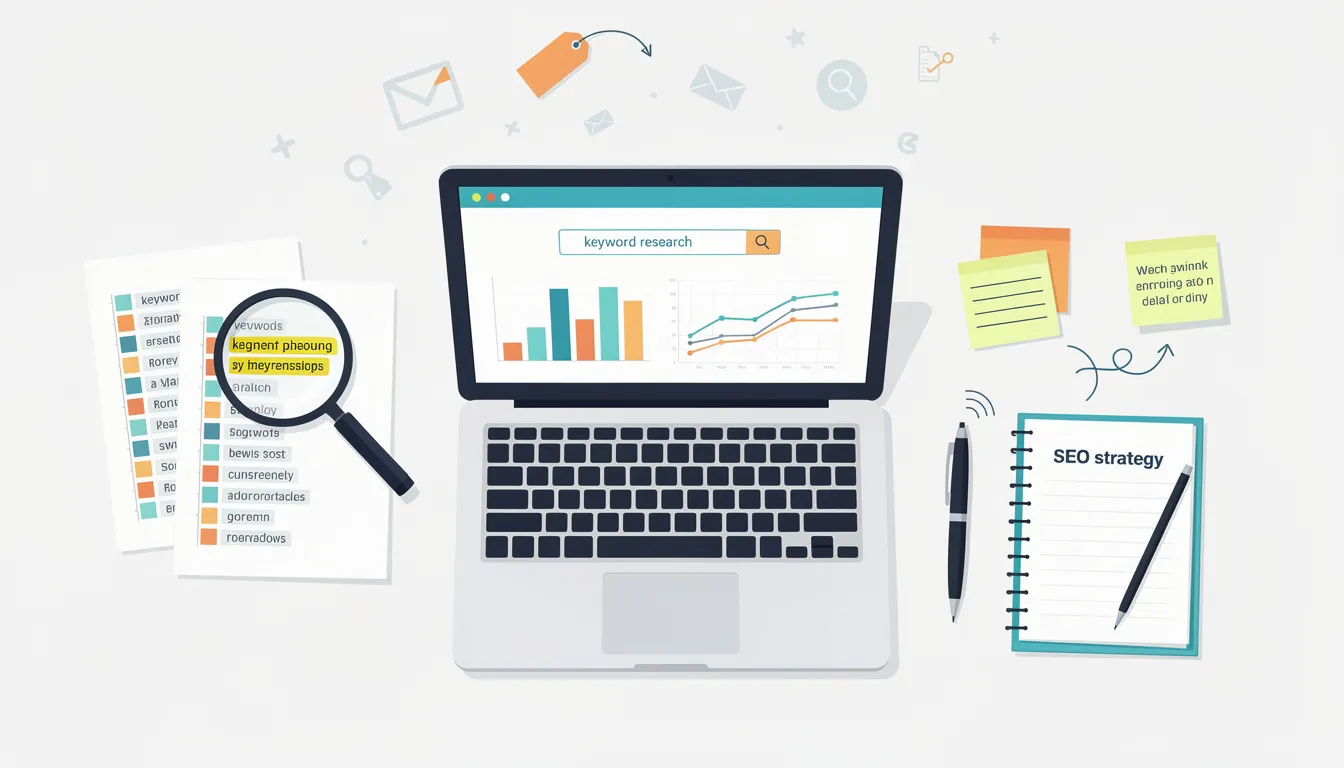
Avoid keyword stuffing, which means forcing the same keywords repeatedly in unnatural ways. Search engines penalize this practice. Instead, use related phrases, synonyms, and LSI terms to build topic depth. If your primary keyword is “on-page SEO,” related keywords might include “page optimization,” “website optimization,” and “search engine optimization” techniques.
keyword-research

HTML Elements: Titles, Meta Descriptions, and Headings

HTML elements are central to on-page SEO because they are visible to both users and search engines. These elements appear in search results and influence whether people click through to your site.
The following sections cover each key element with examples relevant to US audiences in 2026.

Title Tags: Making Clear, Clickable Page Titles

A title tag is the HTML element that defines the title of a web page. It appears in the browser tab and as the clickable headline in search engine results.
Keep titles concise, around 50-60 characters. Place the main keyword toward the beginning when it sounds natural. Use formats like “Primary Keyword – Short Benefit or Description” rather than clickbait language.
Sample title for a US business page: “On-Page SEO Services | Improve Your Website’s Search Rankings”
Sample title for an informational blog post: “On-Page SEO Checklist for 2026: Complete Optimization Guide”
Each page title should be unique across the entire website. Duplicate titles confuse both users and search engine crawlers about which page is most relevant.

Meta Descriptions: Summaries That Earn Clicks

Meta descriptions are short summaries that appear under the title in search results. They influence whether users click but are not direct ranking factors.
Aim for around 140-160 characters. Include the main keyword naturally once. Focus on the benefit or what the reader will learn.
Good meta description example: “Learn proven on-page SEO techniques for US websites. This guide covers title tags, content optimization, and internal linking for better rankings.”
Weak meta description example: “We offer SEO services. Click here to learn more about what we do for websites.”
Google sometimes rewrites meta descriptions, but well-written ones still help guide search snippets and social media previews.

Headings (H1–H3) and Content Structure

Each page should normally have a single H1 heading that states the main topic and usually includes the main keyword. The H1 is the most important heading on the page.
H2 and H3 headings break content into sections and subsections for easier scanning. They help users find what they need and help search engines understand page structure.
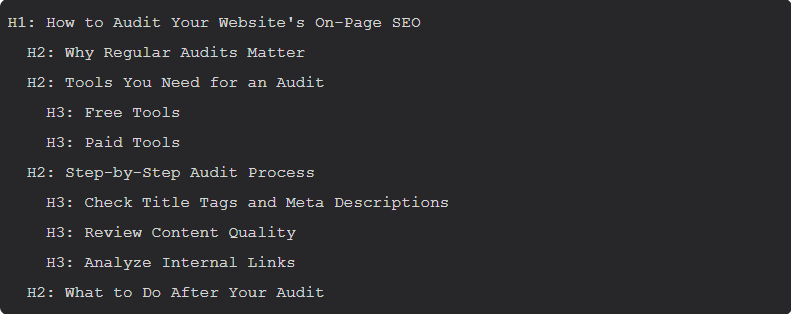
Here is a simple outline example for a US-focused “how-to” article:
on page seo
Headings should be descriptive, not vague. “Key Findings” is weak. “Why Internal Links Improve Rankings” is strong. Include related keywords in headings when it makes sense naturally.

Content Quality, Relevance, and Readability

No on-page tactics can replace weak content. Quality and usefulness are central to on page seo success.
Content should fully answer the main question behind the keyword for US users. Include practical examples, up-to-date information, and insights that help readers take action.
Write in clear, simple language at roughly the 10th-12th grade reading level. Use short paragraphs and active voice. Break up long sections with subheadings, bullet points, and numbered steps.
Longer content often ranks well because it covers a topic in depth. However, length should follow user needs, not a fixed word count. A 500-word page that fully answers a simple question is better than a 2,000-word page padded with filler.
Good formatting supports readability and dwell time. When users can scan and find what they need quickly, they stay longer and engage more. This sends positive signals to search engines.
Add concrete examples, short case scenarios, or basic data points specific to the US market where relevant. For instance, note that over 60% of US searches happen on mobile devices, which affects how content should be structured.

Optimizing for Search Intent and Passage-Level Understanding

Modern search engines and AI tools often evaluate specific sections or passages, not just full pages. This means how you structure individual sections matters as much as overall page structure.
Structure content into clear, tightly focused sections that each answer a single question or subtopic. This helps search engines understand each part of your page independently.
Use descriptive headings that match common queries. Instead of “Updates,” write “How Often Should You Update On-Page SEO?” This matches how people in the USA ask questions online.
Clear, direct answers in the first sentence or two of a section can help with featured snippets and AI summaries. When search engines pull content for snippets, they look for concise, authoritative answers.
Include simple definitions, step lists, and short FAQs throughout your content. These formats align with how users search and how AI systems extract information for overviews.

Internal Linking: Building a Clear Structure Within Your Site

Internal links are links between pages on the same domain. They help users navigate your site and help search engine crawlers discover and understand your content.
Strong internal linking creates cause-effect benefits. It helps search engines discover pages, pass authority between pages, and understand how topics on your site relate to each other.

Best practices for internal linking:

  • Use descriptive anchor text that tells users and search engines what the linked page is about
  • Avoid generic labels like “click here” or “read more”

  • Link from relevant context where the linked page adds value to the reader

  • Aim for 3-5 internal links per page to other pages on your site

Consider creating topic clusters. This means having one main pillar page that covers a broad topic, with several supporting articles that go deeper on subtopics. All these pages link back and forth to each other.

Example for a US service site:

Main “Digital Marketing Services” page links to:

  • “SEO Services” detail page
  • “Content Marketing Services” detail page

  • “Social Media Services” detail page

  • Related blog posts like “How to Choose a Marketing Agency”

New pages should never be left orphaned. Every new page needs links from at least one or two existing, crawled pages so search engines can find it.

URL Structure and On-Page SEO-Friendly URLs

Clean, readable URLs help both users and search engines understand what a page is about before clicking. A good URL acts like a mini-preview of page content.
URL best practices:
Do Don’t
Use short URLs under 60 characters
Use long URLs with random parameters
Use lowercase letters only
Mix uppercase and lowercase
Separate words with hyphens
Use underscores or no separators
Include the primary keyword naturally
Stuff multiple keywords
Use HTTPS for security
Stay on HTTP
A well-structured URL example: /on-page-seo-checklist/
A poor URL example: /page.php?id=12345&ref=main&utm_source=test
HTTPS is essential for security and trust. Modern US sites should already be served over HTTPS. Search engines give a slight preference to secure sites.
Avoid frequent URL changes. If you must change a URL, implement a proper 301 redirect from the old URL to the new one. This preserves the link equity the old URL had earned.

Image Optimization and Media on the Page

Images and graphics improve user engagement but can hurt load time if not optimized. Finding the right balance is part of effective page seo.
Start with file naming. Use descriptive, keyword-relevant filenames like “on-page-seo-audit-2026.png” instead of “IMG_12345.jpg”. Search engines read filenames as signals about image content.
Image alt text is a short text description that helps screen readers for accessibility and helps search engines understand the image. It also enables your images to appear in image search results.
Good alt text is specific and accurate. Include a keyword only if it genuinely matches the image content. “Screenshot of Google Search Console performance report” is better than “SEO tool image.”
For compression and sizing:
  • Compress images to reduce file size while preserving clarity
  • Use modern formats like WebP when possible

  • Size images appropriately for their display size

  • Consider lazy loading for images below the fold

Mobile users in the USA make up over 60% of search traffic. Large, uncompressed images hurt their experience significantly.

User Experience Signals on the Page (Core Web Vitals and Beyond)

User experience (UX) refers to how visitors feel and behave when they use a page. Search engines track UX signals because good experiences indicate valuable content.
Google’s Core Web Vitals are specific metrics for loading performance, interactivity, and visual stability:
Metric What It Measures Target
Largest Contentful Paint (LCP)
Loading performance
Under 2.5 seconds
First Input Delay (FID)
Interactivity
Under 100 milliseconds
Cumulative Layout Shift (CLS)
Visual stability
Under 0.1
Slow load times and layout shifts increase bounce rates and lower user engagement. Data shows bounce rates can double when pages take more than 3 seconds to load. Each second of delay can cost US sites 7% in conversions.
Practical UX improvements include:
  • Reduce heavy JavaScript that blocks loading
  • Use compressed images

  • Keep important content visible immediately above the fold

  • Avoid elements that shift around as the page loads

  • Ensure buttons and links are easy to tap on mobile
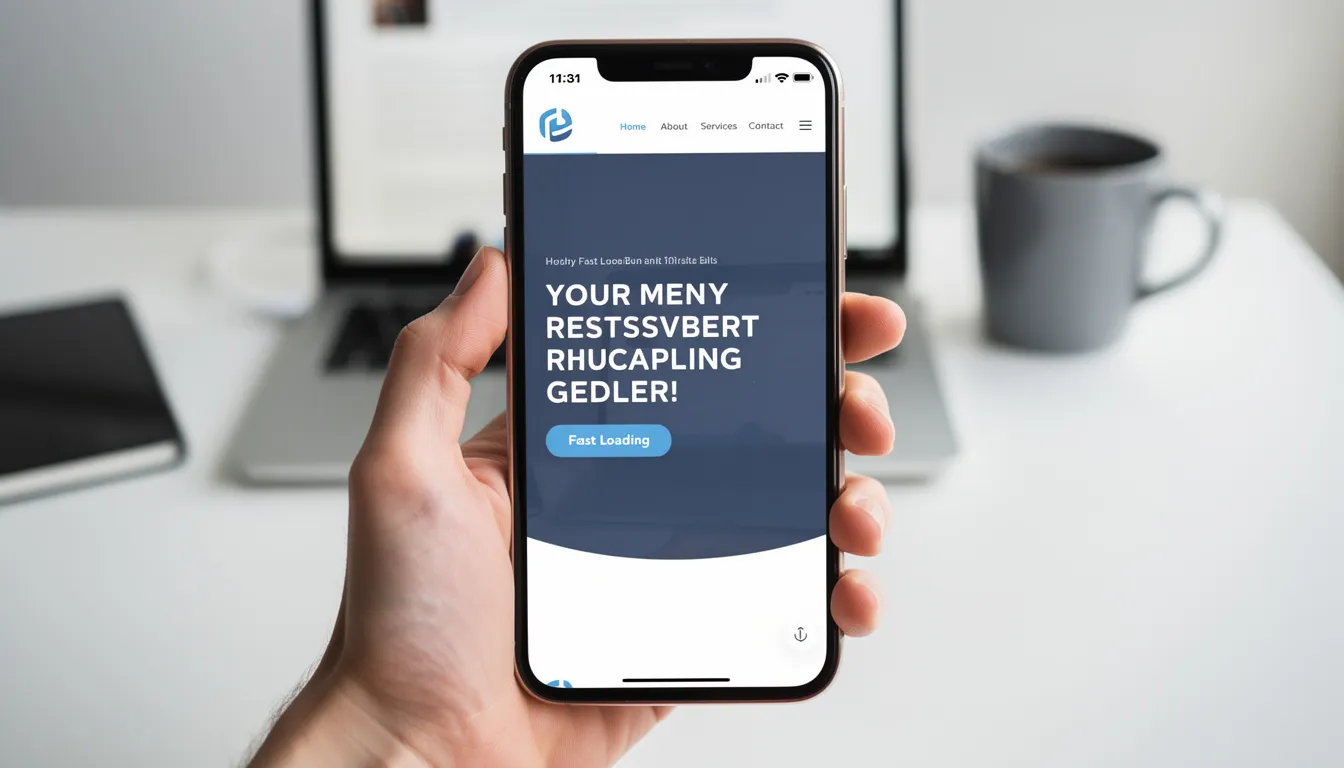
Good UX supports on-page SEO goals by encouraging longer sessions, more clicks to other pages on your site, and more conversions.
schema-markup-structure

Schema Markup and Structured Data

Schema markup is extra code that tells search engines more about what a page contains. It provides context beyond what is visible in the content.
Structured data is not a direct ranking factor. However, it can help create rich results in search engine results pages. Rich results with stars, prices, FAQs, or how-to steps often get higher click-through rates.
Common schema types for US websites:
  • Article for blog posts and news content
  • Product for ecommerce product pages
  • FAQ for frequently asked questions sections

  • HowTo for step-by-step guides
  • Organization for company information
  • BreadcrumbList for navigation structure
Use free tools like Google’s Rich Results Test to validate your schema implementation. The tool shows whether your structured data is valid and which rich results it may enable.
Include at least basic structured data on important informational and commercial pages. FAQ schema, for example, can expand your listing in search results and capture more attention.

On-Page SEO Checklist for US Websites

Use this page seo checklist for each important page on your site:
Structured data is not a direct ranking factor. However, it can help create rich results in search engine results pages. Rich results with stars, prices, FAQs, or how-to steps often get higher click-through rates.
Keyword Research
  • Identify one primary keyword per page
  • Find 3-5 related keywords to include naturally

  • Verify search intent matches your page type

Title Tags and Meta Descriptions
  • Set a unique, keyword-focused title tag (50-60 characters)
  • Write a compelling meta description (140-160 characters)

  • Include the primary keyword in both

Headings and Structure
  • Use one H1 heading that includes the main keyword
  • Organize content with H2 and H3 subheadings

  • Make headings descriptive and useful

Content Quality
  • Fully answer the main question users have
  • Write at a 10th-12th grade reading level

  • Use short paragraphs and active voice

  • Include examples relevant to US audiences

Images
  • Use descriptive filenames

  • Add accurate alt text to every image

  • Compress images for faster loading

Internal Links
  • Add at least 2-3 relevant internal links per page
  • Use descriptive anchor text

  • Link to and from related content

URLs
  • Keep URLs short and readable

  • Include the primary keyword when natural

  • Use HTTPS

Technical and UX
  • Ensure page loads in under 3 seconds

  • Make sure layout is stable as content loads

  • Verify mobile-friendliness

Structured Data
  • Add schema markup where appropriate

  • Validate with Google’s testing tool

US site owners can revisit this seo checklist monthly or when publishing new content. Agencies and practitioners can adapt it into their own internal templates.

Common On-Page SEO Mistakes and How to Fix Them

Many pages fail not because of advanced technical problems but due to basic on-page issues. Regular audits help catch these problems before they hurt traffic.
Missing or duplicate title tags When multiple pages have the same title or no title at all, search engines cannot distinguish between them. Fix: Create unique, descriptive title tags for every page.
Thin content Pages with very little useful content cannot compete with thorough resources. Fix: Expand content to fully cover the topic or consolidate thin pages.
Keyword stuffing Forcing the same keywords repeatedly sounds unnatural and can trigger penalties. Fix: Use synonyms and related phrases instead of repeating the exact same terms.
Weak internal linking Pages without links from other pages are hard for crawlers to find. Fix: Add relevant links from existing pages to new content.
Slow page speed Heavy images and scripts drive users away. Fix: Compress images, defer non-essential scripts, and use caching.
Orphaned pages Pages with no internal links pointing to them may never get indexed. Fix: Ensure every page has at least one link from another crawled page.
Example scenario: Two blog posts target the same keywords, competing against each other. This is called keyword cannibalization. Fix: Merge the posts into one comprehensive article or reposition one to target a different keyword.
Use Google Search Console and site crawler tools to find and correct these issues regularly. Track keyword rankings and watch for unexpected drops that might signal problems.

Measuring On-Page SEO Success in the USA

Tracking results is necessary to understand whether on-page changes are helping or hurting performance. Without measurement, you are guessing.
Key metrics to monitor:
Metric What It Shows Target
Organic traffic
Visitors from search engines
Google Analytics
Keyword rankings
Position in search results
Google Search Console, SEO tools
Click-through rate
Percentage of impressions that get clicks
Google Search Console
Time on page
How long users stay
Google Analytics
Bounce rate
Percentage leaving after one page
Google Analytics
Conversions
Actions taken (purchases, signups)
Google Analytics
Google Search Console and Google Analytics are essential free tools for US websites. Additional SEO platforms like Semrush, Ahrefs, or Moz provide deeper keyword and competitor analysis.
Set simple benchmarks before making major on-page updates. Record current rankings, traffic, and click-through rates so you can compare after changes.
Measure results over weeks or months, not days. Search algorithms update gradually, and it takes time for changes to affect rankings. A page reoptimization might take 2-4 weeks to show measurable impact.

How Often to Update and Maintain On-Page SEO

On-page SEO is ongoing. Pages should not be optimized once and then ignored. Markets change, competitors publish new content, and search behavior evolves.

Recommended maintenance schedule:

  • Monthly: Quick checks of Google Search Console for errors, drops, or opportunities
  • Every 3-6 months: Content reviews on important pages to update information, examples, and keywords
  • Annually: Broader site-wide audits to review structure, internal links, and overall strategy
US markets change quickly. Statistics become outdated, trends shift, and user expectations evolve. Content must stay current to maintain improved search engine rankings.
Update year-based references like “2026” on a regular basis. Refresh screenshots, statistics, and examples when they become stale. Search engines favor fresh, accurate content.
Document each major on-page change and monitor how it affects traffic and keyword rankings afterward. This helps you understand what works for your specific audience and industry.

On-Page SEO vs. Off-Page and Technical SEO

Understanding how on page seo relates to other optimization types helps you prioritize your efforts.
Type Focus Area Examples
On-Page SEO
Content and HTML on individual pages
Titles, headings, content, images, internal links
Off-Page SEO
External signals pointing to your site
Backlinks, brand mentions, social signals
Technical SEO
Site infrastructure and crawlability
Site speed, mobile-friendliness, indexation, security

Strong on-page work makes link building and off-page efforts more effective. When your pages offer valuable content, other sites are more likely to link to them as relevant links. External links become more meaningful when they point to well-optimized, authoritative content.
Many SEO services in the USA offer all three types of optimization but often start with technical health and on-page improvements. This creates a solid foundation before investing in off-page activities.
Ignoring any one area can limit overall impact. A page with great content but slow loading will frustrate users. A fast page with thin content will not rank higher for competitive terms. The best results come from balanced attention to all three areas, especially in competitive US industries.

Short FAQ: Practical On-Page SEO Questions

How often should I optimize my pages? Review your most important pages every 3-6 months. Check for outdated information, new keyword opportunities, and content gaps. Quick monthly checks in Google Search Console help catch problems early.
Does word count matter for rankings? Word count itself is not a ranking factor. What matters is covering the topic thoroughly enough to satisfy user intent. Some topics need 2,000 words. Others need 500. Let the subject guide your length.
Does Google read image alt text? Yes. Search engine crawlers read alt text to understand image content. Accurate, descriptive alt text helps with accessibility and can help images appear in image search results.
Can I over-optimize a page? Yes. Keyword density above 3% often triggers penalties. Unnatural keyword placement makes content hard to read. Focus on writing for users first, then ensure keywords appear naturally without forcing them.
Do all pages need the same level of optimization? No. Core landing pages, product pages, and main service pages deserve thorough optimization. Legal pages, privacy policies, and utility pages need basic optimization but are not priority targets for keyword optimization.
What is the most important on-page factor? There is no single most important factor. On page seo important elements work together. However, if forced to prioritize, focus on creating valuable content that matches search intent, with a clear title tag and proper heading structure.

Conclusion: Treat On-Page SEO as a Long-Term Asset

On-page SEO is a foundational, ongoing practice for any US website that wants steady organic growth. It is not a one-time project but an asset that requires regular attention.
Success comes from combining accurate keyword targeting, clear structure, strong content, and good user experience. Each element supports the others, and weakness in one area limits the impact of the rest.
Apply the on page seo checklist to your most important pages. Monitor results through Google Analytics and Google Search Console. Refine pages regularly as algorithms and your target audience expectations change.
Learning from real-world practitioners and case studies, including those shared by agencies like Outsourcing Technologies, can speed up your improvement. See what works for similar US businesses and adapt proven approaches to your situation.
On-page SEO remains an essential part of any modern digital strategy in the USA. The websites that treat each page as a valuable asset—worth creating, optimizing, and maintaining—are the ones that build lasting visibility in search engine results.