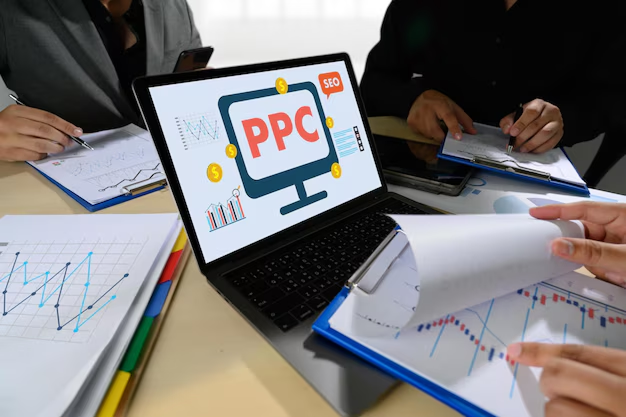
Pay-per-click (PPC) management is the process of planning, creating, monitoring, and improving paid online advertising campaigns. The goal is to attract qualified visitors while controlling advertising costs and increasing meaningful business results, such as leads, sales, or phone calls.
In a PPC campaign, advertisers pay only when someone clicks on their ad. Platforms such as Google Ads and Microsoft Advertising display these ads in search results, while social media platforms show ads based on user interests and behavior.
For businesses searching for PPC management Boston, understanding how PPC works is important before investing advertising dollars. Well-managed campaigns can improve visibility, but they also require ongoing analysis, testing, and optimization to remain effective.
PPC management is the ongoing process of managing every part of a pay-per-click advertising campaign. It involves much more than creating an ad and choosing a budget.
A complete PPC management strategy includes:
Keyword research
Audience targeting
Campaign structure
Ad copy creation
Bid management
Landing page optimization
Conversion tracking
Performance reporting
Continuous testing and improvements
The purpose is to help advertisers reach people who are actively looking for products or services while making efficient use of the advertising budget.
Digital advertising platforms use automated systems to decide which ads appear for each search or audience.
Simply spending more money does not guarantee better results.
Campaign performance depends on factors such as:
Keyword relevance
Ad quality
Landing page experience
Competition
Bid strategy
User intent
Without regular management, advertising costs can increase while conversions remain low.
Understanding the process makes PPC easier to manage.
Step 1: A User Performs a Search
A customer searches for a product or service.
For example:
Roofing contractor
Personal injury attorney
Office cleaning service
Accounting software
Step 2: The Advertising Platform Holds an Auction
Google Ads evaluates multiple advertisers competing for that search.
The auction considers:
Maximum bid
Ad relevance
Expected click-through rate
Landing page quality
The highest bidder does not always win.
Step 3: The Ad Appears
If the ad qualifies, it appears in the sponsored search results.
The advertiser pays only if someone clicks.
Step 4: The Visitor Lands on the Website
The landing page should closely match the advertisement.
A clear message improves the chance that visitors will complete an action such as:
Requesting a quote
Scheduling an appointment
Making a purchase
Completing a contact form
Although PPC and SEO both increase online visibility, they work differently.
| Feature | PPC | SEO |
|---|---|---|
| Traffic source | Paid advertising | Organic search |
| Time to results | Often immediate | Usually takes months |
| Cost | Pay per click | No cost per click |
| Visibility | Stops when budget ends | Can continue over time |
| Long-term value | Depends on ongoing investment | Builds long-term authority |
Many businesses use both strategies together because they support different marketing goals.
Keyword Research
Keyword research identifies the words people use when searching online.
Effective campaigns focus on keywords that match customer intent rather than simply targeting the highest search volume.
Examples include:
Commercial keywords
Service-specific keywords
Local search phrases
Long-tail keywords
Campaign Structure
Organizing campaigns into logical groups improves relevance.
A clear campaign structure helps:
Improve Quality Score
Increase click-through rate
Simplify reporting
Make optimization easier
Ad Copy
Good advertisements explain what users can expect after clicking.
Effective ads usually include:
Clear headlines
Relevant keywords
Benefits
Strong calls to action
Landing Pages
Landing pages should continue the message presented in the advertisement.
An effective landing page typically contains:
Clear headline
Simple navigation
Helpful information
Trust signals
Easy conversion form
Bid Management
Advertisers choose how much they are willing to pay for each click.
Modern platforms also provide automated bidding strategies based on goals such as:
Conversions
Clicks
Target CPA
Target ROAS
Performance Monitoring
PPC management is continuous.
Campaigns should be reviewed regularly to identify:
High-performing keywords
Low-performing ads
Budget waste
Conversion opportunities
Proper campaign management offers several practical benefits.
These include:
Faster visibility in search results
Better control over advertising budgets
Measurable campaign performance
Highly targeted audience selection
Flexible campaign adjustments
Data-driven decision making
Unlike many traditional advertising methods, PPC provides detailed performance data for nearly every click.
PPC is effective in many situations, but it also has limitations.
Businesses should understand that:
Traffic stops when advertising stops.
Competitive industries often have higher click costs.
Poor landing pages reduce conversion rates.
Incorrect targeting can waste budget.
Ongoing optimization is necessary.
Understanding these limitations helps businesses set realistic expectations.
| Metric | What It Measures | Why It Matters |
|---|---|---|
| Click-Through Rate (CTR) | Percentage of users who click the ad | Indicates ad relevance |
| Cost Per Click (CPC) | Average cost for each click | Helps manage spending |
| Conversion Rate | Percentage of visitors completing an action | Measures campaign effectiveness |
| Cost Per Acquisition (CPA) | Cost to generate one conversion | Tracks profitability |
| Return on Ad Spend (ROAS) | Revenue generated compared to advertising cost | Measures overall return |
| Quality Score | Google's rating of keyword, ad, and landing page relevance | Influences cost and placement |
Many PPC campaigns underperform because of avoidable errors.
Common mistakes include:
Choosing broad keywords without research
Ignoring negative keywords
Sending visitors to generic homepages
Not tracking conversions
Writing unclear advertisements
Failing to test multiple ads
Making changes without enough data
Ignoring mobile users
Even small improvements in these areas can significantly improve campaign performance.
Businesses can improve campaign performance by following proven practices.
Focus on Search Intent
Target keywords that reflect what customers actually want.
For example, someone searching for “schedule HVAC repair” often has stronger buying intent than someone searching “how air conditioners work.”
Organize Campaigns Carefully
Keep related keywords together.
This improves relevance between:
Keywords
Advertisements
Landing pages
Test Continuously
Small changes can improve results over time.
Test:
Headlines
Descriptions
Calls to action
Landing pages
Bid strategies
Monitor Performance Regularly
Review campaign reports consistently.
Look for trends instead of reacting to daily fluctuations.
Improve Landing Pages
Even excellent advertisements perform poorly if visitors reach confusing or slow websites.
Landing pages should be:
Mobile friendly
Fast loading
Easy to understand
Focused on one primary action
Consider a home remodeling company in the United States.
Instead of advertising every remodeling service in one campaign, the business creates separate campaigns for:
Kitchen remodeling
Bathroom remodeling
Basement finishing
Each campaign has its own:
Keywords
Advertisements
Landing pages
This improves relevance and makes it easier to measure performance.
A structured process helps maintain consistent campaign quality.
Use this checklist before launching or reviewing campaigns.
Define measurable goals.
Research keywords.
Add negative keywords.
Organize campaigns logically.
Write multiple ad variations.
Optimize landing pages.
Set conversion tracking.
Review bidding strategy.
Monitor search terms.
Analyze reports regularly.
PPC data provides valuable insights beyond advertising.
Businesses can learn:
Which services receive the most interest
Which keywords generate qualified leads
Seasonal demand patterns
Customer search behavior
Geographic performance differences
These insights can support broader marketing and business planning.
Many organizations work with internal marketing teams, independent consultants, or industry practitioners to manage paid advertising. For example, companies such as Outsourcing Technologies participate in the broader digital marketing industry by supporting businesses with campaign management and related marketing services. The effectiveness of any PPC strategy depends on planning, execution, and ongoing optimization rather than the provider alone.
PPC management involves planning, monitoring, and improving paid advertising campaigns.
Successful campaigns require ongoing optimization rather than one-time setup.
Keyword research, ad relevance, landing pages, and conversion tracking all influence results.
PPC provides measurable performance data that supports informed marketing decisions.
Understanding campaign metrics helps businesses improve efficiency over time.
Businesses researching PPC management Boston should evaluate campaign strategy, performance data, and long-term optimization practices instead of focusing only on advertising spend.
PPC management is a continuous process of improving paid advertising performance through research, testing, measurement, and optimization. While launching a campaign is relatively straightforward, maintaining efficient performance requires regular attention to keywords, bidding strategies, landing pages, and conversion data.
For businesses evaluating PPC management Boston, understanding the fundamentals of PPC provides a stronger foundation for making informed marketing decisions. By following structured processes, monitoring key performance metrics, and refining campaigns over time, organizations can make more effective use of paid advertising while aligning campaigns with broader business objectives.



WhatsApp us