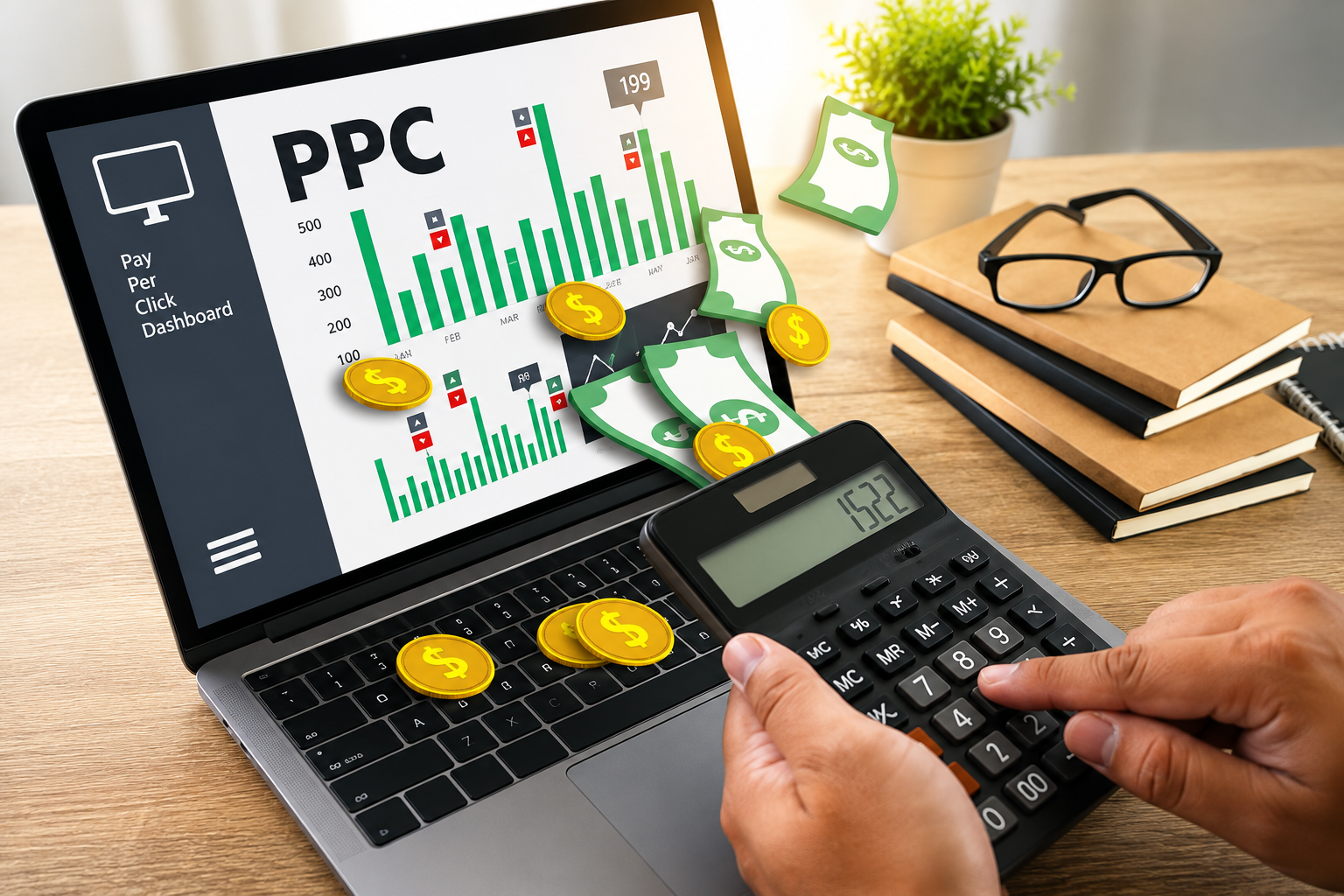
Pay-per-click (PPC) advertising costs vary based on several factors, including industry, competition, target keywords, campaign goals, and advertising platform. There is no fixed price for running a PPC campaign because advertisers compete in real-time auctions, and the cost of each click changes based on demand.
For businesses researching Boston PPC Services, understanding how PPC costs are calculated is essential for setting realistic budgets and measuring results. The total investment includes more than the advertising budget. It may also include campaign management, landing page improvements, conversion tracking, and ongoing optimization.
This guide explains how PPC pricing works in the United States, what influences advertising costs, and how businesses can build a budget that aligns with their goals.
What Is PPC Cost?
PPC cost refers to the total amount a business spends on a pay-per-click advertising campaign.
The overall cost typically includes:
Advertising spend
Cost per click (CPC)
Campaign management
Landing page development
Conversion tracking
Reporting and optimization
Some businesses manage campaigns internally, while others work with marketing teams or external specialists.
Why PPC Costs Vary
No two businesses pay exactly the same amount for PPC advertising.
Advertising platforms determine pricing through an auction system that considers several factors.
These include:
Keyword competition
Industry
Geographic targeting
Audience size
Ad quality
Landing page relevance
Bid strategy
Because these variables change regularly, PPC costs can increase or decrease over time.
How Google Ads Determines Cost
Google Ads does not simply reward the highest bidder.
Instead, it evaluates several factors before displaying advertisements.
Maximum Bid
Advertisers choose the highest amount they are willing to pay for a click.
This does not always become the actual amount charged.
Quality Score
Google assigns a Quality Score based on factors such as:
Keyword relevance
Advertisement quality
Landing page experience
Expected click-through rate
Higher Quality Scores often reduce advertising costs while improving ad placement.
Ad Rank
Google combines bid amount and Quality Score to calculate Ad Rank.
This determines whether an advertisement appears and where it is positioned.
Average PPC Cost Ranges
Actual costs differ by industry, but the table below provides general examples commonly seen in the United States.
Expense
Typical Range
Cost per click (CPC)
$1 to $10+
Highly competitive industries
$20 to $100+ per click
Monthly advertising budget
$500 to $20,000+
Campaign management fees
Vary by provider and campaign complexity
These figures are examples rather than fixed pricing.
Factors That Affect PPC Costs
Several variables influence the amount businesses spend.
Industry Competition
Highly competitive industries generally have higher click costs.
Examples include:
Legal services
Insurance
Financial services
Healthcare
Home improvement
Businesses in less competitive markets may experience lower advertising costs.
Keyword Selection
Broad keywords often attract more competition.
For example:
Personal injury lawyer
Mortgage lender
Roofing contractor
Long-tail keywords usually have lower competition and may attract more qualified visitors.
Examples include:
Emergency roof repair
Family dentist accepting new patients
Small business tax accountant
Geographic Targeting
Advertising costs vary depending on where ads appear.
Targeting larger geographic areas often increases competition and advertising spend.
Audience Targeting
Advertisers can narrow audiences using factors such as:
Age
Interests
Household income
Device type
Time of day
More precise targeting may improve efficiency by reducing wasted clicks.
Advertising Budget vs. PPC Management Cost
Businesses sometimes confuse advertising spend with management costs.
The table below explains the difference.
Advertising Budget
Management Cost
Paid directly to advertising platform
Paid for campaign management services
Determines how often ads appear
Covers planning, optimization, reporting, and monitoring
Changes based on campaign goals
Varies depending on campaign size and complexity
Understanding this distinction helps businesses plan more accurately.
Common PPC Pricing Models
Campaign management may use different pricing structures.
Common models include:
Percentage of Ad Spend
Management fees are based on a percentage of the advertising budget.
Flat Monthly Fee
A fixed monthly payment covers campaign management regardless of ad spend.
Hourly Consulting
Businesses pay for consulting time rather than ongoing management.
Project-Based Pricing
Some advertisers hire specialists for campaign setup or audits instead of ongoing management.
How Much Should a Business Budget?
There is no universal budget.
A reasonable starting budget depends on:
Business goals
Industry
Customer lifetime value
Competition
Expected lead volume
For example:
A local plumbing company and a national software provider have very different advertising costs because customer value and competition differ significantly.
How to Estimate PPC Budget
Businesses can estimate a starting budget using a simple process.
Step 1: Identify Business Goals
Examples include:
Phone calls
Online purchases
Quote requests
Appointment bookings
Step 2: Estimate Conversion Rate
Estimate how many website visitors typically become customers.
Step 3: Estimate Cost Per Click
Research average keyword costs using advertising tools.
Step 4: Calculate Required Clicks
Determine approximately how many visitors are needed to achieve the desired number of conversions.
Step 5: Review Performance
Adjust the budget after collecting enough campaign data.
This example demonstrates how business goals influence advertising costs.
Benefits of Investing in PPC
When campaigns are managed effectively, PPC offers several advantages.
These include:
Immediate search visibility
Measurable performance
Flexible budgeting
Geographic targeting
Audience segmentation
Fast campaign adjustments
Businesses can monitor results almost in real time.
Limitations of PPC
PPC also has practical limitations.
Businesses should understand that:
Costs increase in competitive industries.
Traffic stops when campaigns stop.
Poor landing pages reduce conversion rates.
Continuous optimization is necessary.
Results depend on campaign quality as well as budget.
Understanding these limitations helps create realistic expectations.
Common Mistakes That Increase PPC Costs
Many advertisers spend more than necessary because of avoidable mistakes.
Examples include:
Using broad keywords without research
Ignoring negative keywords
Sending visitors to generic homepages
Failing to track conversions
Pausing campaigns too quickly
Making frequent bid changes without enough data
Ignoring mobile optimization
Correcting these issues often improves advertising efficiency.
Best Practices for Managing PPC Costs
Businesses can control advertising expenses by following several practical strategies.
Improve Quality Score
Relevant ads and helpful landing pages often reduce click costs.
Use Negative Keywords
Negative keywords prevent advertisements from appearing for unrelated searches.
This reduces wasted spending.
Monitor Search Terms
Regular reviews help identify new keyword opportunities and irrelevant traffic.
Test Advertisements
Compare multiple versions of headlines and descriptions.
Small improvements can increase click-through rates and conversions.
Optimize Landing Pages
Landing pages should match the advertisement and provide a clear next step.
This improves user experience and conversion rates.
Real-World Example
A residential HVAC company launches two campaigns.
Campaign A targets broad keywords such as:
Air conditioning
Campaign B targets specific services such as:
Emergency AC repair
Furnace replacement
Heat pump installation
Campaign B generates fewer clicks but attracts visitors with stronger buying intent.
As a result, the company receives more qualified leads while spending less on unnecessary traffic.
PPC Budget Planning Checklist
Before launching a campaign, review the following checklist.
Define campaign goals.
Estimate customer value.
Research keyword costs.
Set an initial budget.
Install conversion tracking.
Create dedicated landing pages.
Add negative keywords.
Review campaign reports regularly.
Test advertisements continuously.
Adjust budgets based on performance.
Industry Perspective
Many businesses rely on internal marketing teams, consultants, or experienced industry practitioners to manage advertising campaigns. For example, organizations such as Outsourcing Technologies represent one type of service provider within the broader digital marketing industry. Regardless of who manages the campaign, long-term success depends on consistent optimization, accurate performance measurement, and informed decision-making.
Key Takeaways
PPC costs depend on competition, keywords, audience targeting, and campaign quality.
Total investment includes advertising spend as well as campaign management and optimization.
Quality Score plays an important role in determining click costs.
Businesses should base budgets on measurable goals rather than arbitrary spending limits.
Continuous optimization helps improve efficiency over time.
Companies evaluating Boston PPC Services should consider campaign strategy, performance measurement, and long-term optimization alongside advertising costs.
Conclusion
There is no single answer to the question of how much PPC costs because every campaign is different. Advertising expenses vary based on industry, competition, keyword selection, audience targeting, and campaign quality.
Businesses that understand how PPC pricing works are better prepared to build realistic budgets and evaluate campaign performance. Instead of focusing only on click costs, it is more useful to consider overall business outcomes such as qualified leads, sales, and return on investment.
For organizations researching Boston PPC Services, a clear understanding of PPC costs provides a strong foundation for making informed advertising decisions and managing campaigns more effectively over time.